EU wants ‘Farage clause’ in Brexit “reset” talks with UK
Key Takeaways:
- Dishonesty attracts the ultimate sanction — The SDT struck off Alison Clare Banerjee after finding she repeatedly misled clients and the employment tribunal, including fabricating IT issues to excuse her misconduct.
- Client consent is non-negotiable — Banerjee accepted a settlement without her client’s knowledge, breaching the core duty to act in the client’s best interests and to obtain informed instructions.
- Transparency protects the profession — The tribunal refused anonymity, emphasising that public confidence in solicitors depends on openness where serious misconduct is established.
Why Brussels is demanding compensation guarantees – and what it reveals about trust, politics, and the legacy of Brexit
The European Union is seeking a striking new safeguard in its negotiations with the UK over a post-Brexit “reset”: a termination provision that would require financial compensation if a future British government walks away from the deal.
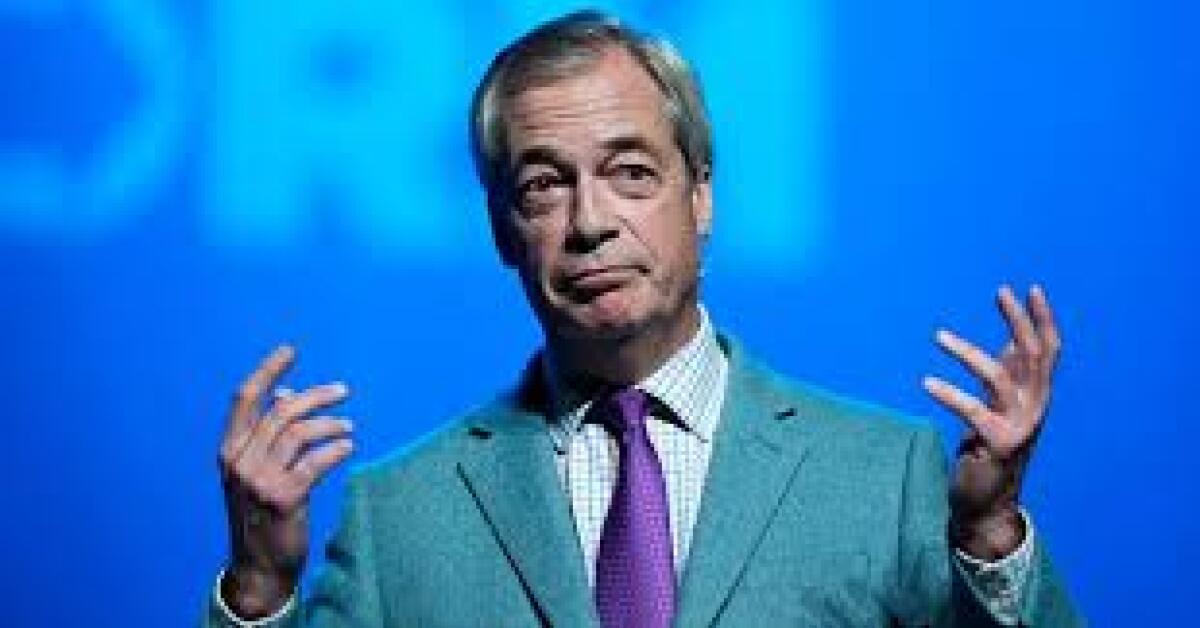
Dubbed the “Farage clause” by EU diplomats, the proposal reflects lingering mistrust after the UK’s departure from the bloc and growing anxiety in Brussels that any rapprochement agreed by Sir Keir Starmer could be undone by a later administration hostile to closer EU alignment.
According to reporting by the Financial Times, draft text linked to a proposed agreement on agricultural trade would require whichever party exits the deal to pay the costs of reinstating border checks, controls, and infrastructure. Those costs, officials acknowledge privately, could run into the billions.
While UK sources insist such provisions are routine and reciprocal, the political symbolism of the clause is hard to ignore. It serves as a reminder that, more than five years after Brexit formally took effect, trust remains the EU’s most valuable – and fragile – negotiating currency.
What is the “Farage clause”?
At the heart of the controversy is a draft sanitary and phytosanitary (SPS) agreement – a deal designed to reduce or remove checks on food, animal, and plant products traded between the UK and the EU.
SPS checks were one of the most visible consequences of Brexit, particularly for exporters of fresh produce, meat, and dairy. British businesses have repeatedly complained about delays, spoilage, and rising costs caused by veterinary inspections and paperwork introduced after the UK left the single market.
The proposed “Farage clause” would apply if either side withdrew from the SPS agreement. In that event, the exiting party would be liable to compensate the other for:
- building new border inspection posts
- purchasing equipment
- recruiting and training customs and veterinary staff
- reinstating regulatory and inspection regimes dismantled under the deal
EU officials argue the clause is a practical necessity. From their perspective, removing checks requires expensive dismantling of systems that were only recently rebuilt following Brexit. If a future UK government were to tear up the agreement, Brussels wants assurance it would not once again be left footing the bill.
The nickname itself is revealing. Reform UK leader Nigel Farage has repeatedly vowed to undo any agreement that brings Britain closer to EU regulatory alignment. To EU negotiators, the clause is less about Starmer – and more about the political uncertainty that could follow him.
A response shaped by Brexit’s financial scars
The EU’s insistence on compensation cannot be understood without revisiting the financial shock of Brexit itself.
When the UK left the single market in 2020, the EU created a €5.4bn Brexit Adjustment Reserve to help member states cope with the disruption. The fund paid for customs infrastructure, border staff, IT systems, and regulatory enforcement that had been unnecessary for decades.
Ireland, the country most exposed to Brexit, received around €920m. The Netherlands was allocated more than €800m. Ports were redesigned, inspection facilities built, and thousands of officials hired to police borders that had effectively disappeared since the creation of the single market in 1993.
From Brussels’ perspective, these costs were not theoretical – they were real, politically contentious, and painful. Any agreement that removes the need for those controls, EU officials argue, must come with legal protection against having to rebuild them yet again.
UK response: “This is normal – and it works both ways”
UK sources have pushed back strongly against the suggestion that the clause represents a hostile or anti-democratic manoeuvre.
Officials stress that exit and termination provisions are standard features of international agreements, particularly in trade and regulatory cooperation. Such clauses, they say, are designed precisely to avoid disputes by setting out in advance who bears the costs of withdrawal.
Crucially, UK negotiators insist the clause is reciprocal. If the EU were to withdraw from the agreement in the future, Brussels would be required to compensate the UK for equivalent costs.
A Labour source dismissed criticism of the provision as political theatre, saying:
“Exit provisions are a basic staple of any international trade agreement. Pretending these routine legal contingencies constitute a democratic outrage is frankly exhausting.”
From Labour’s perspective, the clause does not bind future governments politically – it simply ensures that if they choose to leave, they must accept the financial consequences of doing so.
Why SPS matters so much
The intensity of the debate reflects the importance of the SPS agreement itself.
For UK exporters, food and agricultural trade has been one of the hardest-hit sectors since Brexit. Many small producers simply stopped exporting to the EU, citing paperwork burdens and unpredictable delays.
An SPS deal could:
- dramatically reduce checks on UK-EU food trade
- lower costs for exporters
- ease pressure on Northern Ireland supply chains
- reduce food price inflation
However, such a deal would also require regulatory alignment with EU food standards, limiting the UK’s ability to diverge in areas such as animal welfare, pesticides, and genetically modified crops.
That trade-off – economic friction versus regulatory autonomy – has defined Brexit politics from the start.
The politics of a “reset”
Sir Keir Starmer has framed the reset not as rejoining the EU, but as “making Brexit work”. Labour has ruled out returning to the single market or customs union, but it has prioritised pragmatic cooperation in areas where Brexit has demonstrably increased costs.
Alongside the SPS talks, the reset package includes:
- a return to the Erasmus student exchange programme (already agreed in principle)
- cooperation on energy and carbon pricing
- negotiations on the EU’s carbon border adjustment mechanism (CBAM)
Progress, however, has been uneven. Hopes of securing a CBAM deal before Christmas faded amid technical and political complexity, highlighting how difficult it is to unwind Brexit frictions without reopening fundamental questions about alignment.
EU leverage and hardball tactics
For Brussels, the power dynamics are clear. As Anand Menon, director of UK in a Changing Europe, puts it:
“We shouldn’t be surprised that the EU is playing hardball. After all, they have decided that we need these agreements more than they do. As such, they will extract every last concession.”
The EU’s market of 450 million consumers dwarfs the UK’s, and the economic damage of trade friction has fallen disproportionately on British exporters. That reality shapes every negotiation.
From the EU’s standpoint, the UK’s political volatility – five prime ministers since the Brexit referendum – justifies ironclad legal protections. The “Farage clause” is not about ideology, but risk management.
A clause aimed at future governments
Perhaps the most controversial aspect of the clause is its implicit message: Brussels does not trust British political continuity.
While Starmer may sign an agreement in good faith, the EU is acutely aware that UK governments can – and do – change direction abruptly. Brexit itself was a reversal of decades of policy.
The clause does not prevent a future government from withdrawing. But it raises the price of doing so, transforming political choices into financial ones.
Critics argue this undermines democratic sovereignty by discouraging policy change. Supporters counter that sovereignty always comes with consequences – and that international law exists precisely to make those consequences predictable.
What happens next?
Formal negotiations on the SPS agreement are expected to begin this month, though officials on both sides caution they could take many months.
The SPS file is among the most technically complex in the reset package, involving thousands of pages of regulation and deep questions about enforcement and oversight.
The “Farage clause” will almost certainly remain contentious. Whether it survives in its current form, is softened, or is reframed in more neutral legal language will be a key test of how far both sides are willing to go.
A lingering lesson of Brexit
Ultimately, the dispute over the “Farage clause” is less about one politician than about the enduring consequences of Brexit.
Five years on, the EU is still building safeguards against British unpredictability. The UK, meanwhile, is discovering that rebuilding cooperation means accepting constraints it once rejected.
The reset talks show that Brexit did not end negotiations between Britain and Europe – it merely changed their tone. Where once there was assumption of permanence, there is now contingency planning. Where once there was trust, there is legal text.
Whether the UK accepts that reality – or once again recoils from it – may determine whether this reset becomes a lasting settlement, or just another chapter in an unfinished divorce.
Related Articles:
Changes to UK Visa and Settlement Rules After the 2025 Immigration White Paper
Consultation on the UK Treasury Bill Market: What It Means for Government Financing and Investors